Showing posts with label food. Show all posts

Monday, March 5, 2012

valentine's day 2012

Valentine's Day for us comes in two parts: the morning/breakfast part and the evening/dinner part. Steve usually sets out a few things for me on the table in the morning—a card, flowers, a few chocolates, maybe some sort of beverage to go with dinner. This time it was ranunculus flowers, chocolates from Recchiuti, a few macarons from Miette, and a big bottle of my new favorite Elderflower soda. Clearly, he had done some shopping at the Ferry Building.

i'm lovely?

Once I've documented Steve's efforts, it's generally time to banish him to the office while I make my presentation for him. I started the tradition of baking something special for breakfast back in 2008. That year, it was a complete surprise for him when he got up in the morning and found a scone with a Post-It saying "Eat Me." Since then, he obviously knows there will be something, but I usually manage to keep whatever it is a secret until that morning. This year, I made Honey Tea Cakes from the Miette Cookbook.

Fun fact: Steve and I managed to get each other matching Valentine's Day cards this year. They weren't exactly the same, but they were both from Night Owl Paper Goods and printed on wood.

for steve


Enough about breakfast; on to dinner! Like the breakfast tradition, this started in 2008. The previous three years we had gone to restaurants for Valentine's Day: Zuni Cafe, Foreign Cinema, then Fresca. 2008 was when we decided that it was better to cook something special at home and save restaurant meals for other nights, when the quality would probably be better there anyway.

Since then, these dinners have gotten more and more ambitious. That first year, Steve made Oysters & Pearls from The French Laundry Cookbook and a fancy dessert from Elizabeth Falkner's Demolition Desserts. For our main course, he played it pretty safe with a cowboy steak, potatoes, and some green beans. (The processing on those photos makes me cringe now.) 2009's meal also had the Oysters & Pearls, continued with a fish dish from The French Laundry Cookbook, and then finished with a fancy dessert from the Cannelle et Vanille food blog. Then I got obsessed with lobster, prompting a French Laundry lobster main course in 2010, a different one in 2011, as well as a lobstery starter that year. It may have been a bit much. Dessert in 2010 was another Cannelle et Vanille recipe, but it was back to Demolition Desserts last year for some "tiramisushi."

This year, things got even crazier. Having exhausted all of the lobster recipes in the The French Laundry Cookbook, I bought Steve a new fancy cookbook for Christmas: Eleven Madison Park, from the restaurant of the same name in NYC. We didn't know about it in time to try to eat there during our New York trip in 2010, but since then it's risen to the top of my wishlist for if we make it back someday. The book is just gorgeous, but the recipes are even more involved than the French Laundry ones. I went through it ahead of Valentine's Day, marking several recipes from each season that looked both appealing and doable. From there, I left it up to Steve to decide which dishes (and how many) to make. I figured he would choose maybe one or two and then make something easier for the rest of our meal. However, he decided to tackle all three from that book.

It required quite a lot advanced planning, as well as a little specialty shopping to find things like glucose syrup. Steve actually started cooking on Sunday, finishing the first 10 components—things from all three dishes that could be done ahead. A few other parts were prepared on Monday night, and then Steve worked from home in the morning on Valentine's Day so he could cook more in the afternoon. He had some issues with some of the cooking times in the book, but it all came out fine eventually. The first course was even ready around the completely reasonable dinnertime of 7:30pm.


beet salad with chevre frais and caraway

The beet salad that served as our first course had a few kinds of roasted beets, some caraway tuiles, rye crumble, beet vinaigrette, and goat cheese mousse that was dispensed from one of those whipped cream siphons. The caraway tuiles and rye crumble were the most surprising component: interestingly sweet and cookie-like, but kind of wheaty and savory too. But of course, the goat cheese mousse was my favorite part. We each had an extra squirt of it at the end to mop up the last of the beet vinaigrette from our plates.


lamb - glazed rib eye with puntarella, apples, and vadouvan

The main course was lamb loin with "blackened" apples, roasted garlic, puntarella (the greens) prepared three ways, a crumble of dehyrdated apples and rendered lamb fat, and a couple sauces. It sounded like a really interesting dish when I saw it in the book, and definitely lived up to that. The lamb, cooked sous vide, was done perfectly. Then there was the sweetness of the apple, the bitterness of the greens, and a subtle Indian flavor of the vadouvan in the crumble. The garlic was also nice for variety. And despite Steve's cheats in making the (not) veal stock, the sauces were amazing.


chocolate, fleur de sel and caramel

For dessert, we had chocolate and caramel in various incarnations. There was a foamy caramel gel on the bottom, salted caramel ice cream, chocolate sorbet, cocoa nib tuiles, chocolate ganache circles, sucree (cookie) tubes, and a crumble of the same cookies to hold the ice creams in place. This was the dish that had the most leftovers after that night, and it grew on me each time we had some. We ditched the chocolate ganache circles after that first time, though, since they were really difficult cut out and transfer. Luckily, I didn't miss them. The salted caramel ice cream and the cocoa nib tuiles were my favorite components anyway, although the intensely chocolatey sorbet and the slightly orangey cookies provided a good contrast. It was a nice rich ending for our Valentine's meal.


But wait, there's more! We had leftovers two nights later, and Steve also made another fancy salad from Eleven Madison Park. He had gotten the ingredients for both that and the beet salad, just in case, but I had discouraged him from trying to make the extra course for Valentine's Day. It worked out much better for him to make the second salad on Thursday to supplement our meal of leftovers.


radicchio salad with mozzarella, mango, and basil

This tasted a little like a caprese salad, probably because of the basil and mozzarella. The role of the tomato was played by mango, however, which countered the bitterness of the radicchio quite well. Technically, this wasn't the kind of radicchio that was called for in the recipe, and we probably should have placed individual leaves on the plate instead of little blossoms/wedges. The overall effect is much less dainty than in the cookbook picture. But I was also having issues with the basil oil running on the plate, so I wasn't going to perfectly reproduce the cookbook picture anyway.


Which brings me to the picture-taking aspect of all this. The last 3 years, I've taken pictures of our Valentine's dinners on our coffee table in the living room, using my tripod and a floor lamp (or just the overhead light) to illuminate the food. That has been, shall we say, less than optimal. But now I have the tabletop light that I got for Christmas! Two of them would probably be better than one, but it's a big improvement over undiffused and ambient lights. No more sparkly meat!

I set up my station on the dining room table this time and did all the things that I should really be doing every time I take food pictures... I ironed the white sheet that I used as a backdrop on the table, and I took the time to set up my tripod. I even took test shots with an apple on a plate and reviewed them in Lightroom before shooting the real food. That let me check for exposure compensation so that the whites would actually be bright enough, and I was able to evaluate how the light was hitting the apple. From there, I decided to drape an extra piece of aluminum foil across the front of my set-up, below the camera, to bounce the light back onto the food from that direction as well. I had basically made my own light box with the tabletop light on the right side, a white reflector across from that on the left (with a piece of foil hung down the middle for extra reflecting strength), and a small piece of white poster board (also with foil) across the top between the two. Then, I shot down into the box from above with my camera mounted on the tripod, making sure that the poster board on top was far enough back to be out of the frame.

I used my remote to trigger the shutter and enabled mirror lockup to minimize camera shake. And this time, I played with the live view function on my camera, since the camera started so high up that I had trouble reaching the viewfinder with my eye, even while standing on a chair. With live view, I could actually zoom in and move a little box around the frame to pick my focal point and then watch it focus right before each shot was taken.

My main issue with taking these pictures was actually just controlling the food. I mentioned the basil oil in the picture of the radicchio salad, but the sauce under the beet salad also wanted to run a little too much. We tried having Steve apply the liquid components at the last minute, when the plate was in place for the photo. That helped a lot, especially with the beet salad and the main course, but it didn't fix the problem for the radicchio salad. I think we would have had to thicken the basil oil with something to reproduce those perfect green dots in the cookbook.

The other troublemaker was the salted caramel ice cream in the dessert. It melted so quickly at the edges that there were little pools starting to form under the carefully shaped scoop by the time I even started shooting.

Despite the challenges, I think the pictures turned out better than in previous years. Chances are, next year's dinner will not be as fancy as this one, but hopefully my pictures will continue to improve. Someone has to show off Steve's hard work, after all, and this dinner certainly involved a lot of it.

Thursday, June 23, 2011

girl & the goat

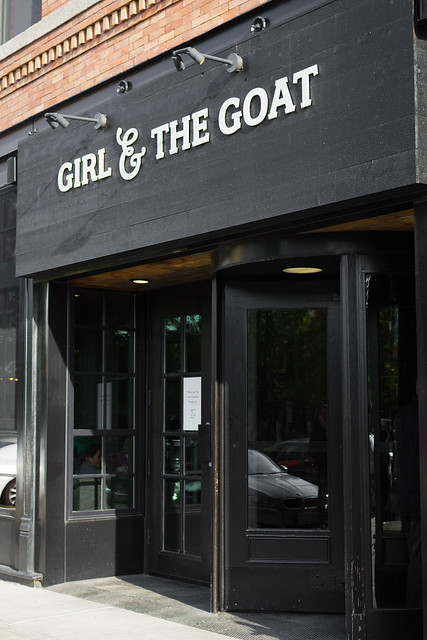
Our first dinner reservation in Chicago was at Girl & the Goat. It's the restaurant of Chef Stephanie Izard, winner of Top Chef season 4. It was in West Loop, which wasn't very convenient via public transportation from where we were staying in River North, so we ended up taking a cab there. It was chilly outside anyway.

girl & the goat

The decor was somewhat rustic, with lots of warm wood, and it was pleasantly crowded inside—pretty lively for 6pm on a Tuesday night.


One of the interesting things we noticed when we got the menu was that there was a bread section. Most restaurants automatically bring you the obligatory bread, which is good but not terribly exciting. It's really just a filler—fill time before the rest of the food comes out, fill space in your stomach so you're not starving for too long. A few places have an olive tapenade or oil & vinegar, but it's often just good quality butter. Not exactly ground breaking.

The exciting thing here is that the bread isn't an opportunity missed. By offering three creative options for bread with accompaniments, and charging for them, the bread becomes a meaningful course rather than filler. It's also a lot less likely to go to waste. We chose the "Esteban Fresas":

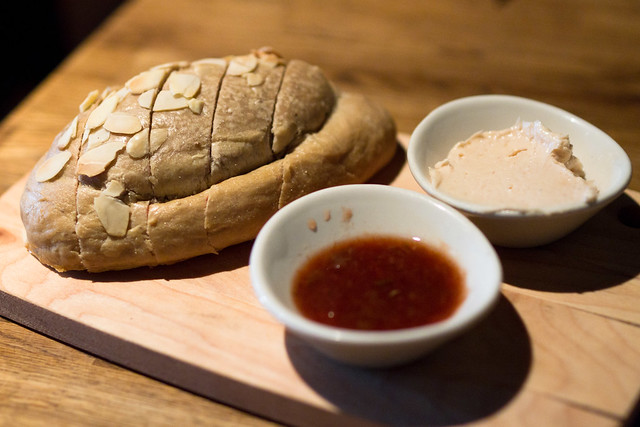
esteban fresas . strawberry butter . strawberry rhubarb agrodolce

esteban fresas

This was a great way to start the meal. The bread was warm and fresh—kind of a dense, wheaty mini-loaf with almonds on top. To go with it, there was strawberry butter and strawberry rhubarb agrodolce. The strawberry butter had only a hint of sweetness, a little salt, and some strawberry flavor. Meanwhile, the agrodolce had the sweetness of the strawberries, as well as the acidity to cut through the butter. If the dessert menu hadn't been so appealing, I might have been tempted to end the meal with this too.


The next to arrive was our selection from the vegetable column of the menu:

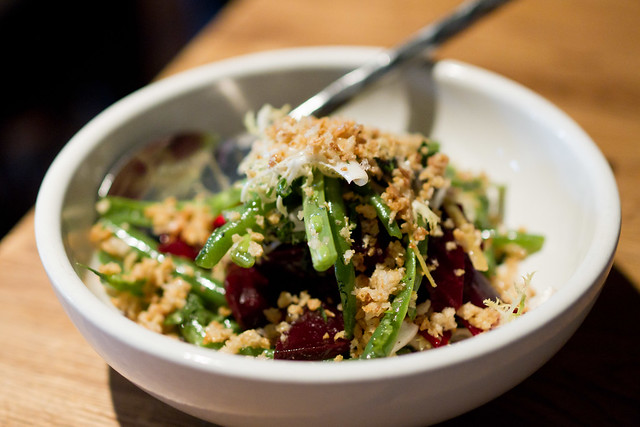
roasted beets . green beans . white anchovy . avocado creme fraiche

roasted beets

I've come to enjoy beet salads, but a lot of them seem to be pretty similar. This one was a little different, though. It had green beans, white anchovy, avocado creme friache, and bread crumbs instead of greens, citrus, and/or cheese. There was a refreshing summer-like coolness to it all, balanced by the savory white anchovy and the crunchy breadcrumbs.


Goat came soon after. With the restaurant being called Girl & the Goat, I was expecting at least one goat dish on the menu. In fact, it had its own category on the smaller menu with the bread and the oyster preparations. We went with the Goat Carpaccio, which I was curious to try.

goat carpaccio . tongue-olive vinaigrette . smoked roe

goat carpaccio

It wasn't quite as memorable a dish as the previous couple, but it was still very tasty. The things that left the biggest impression were the delicate texture of the goat, sliced paper-thin, and the tangy acid of the vinaigrette. Good stuff.


The other revelation of the meal for me was the fish course:

pan roasted halibut . brandade . grilled asparagus . green garlic . blackberry

pan roasted halibut

I let Steve make our selection from the fish column of the menu. I probably would have chosen the crudo, the calamari with rabbit ravioli or the one with the soft shell crab over the more typical (read: boring) fish fillet. However, Steve chose well in this case. The halibut was complemented really well by the salt cod in the brandade, the slices of asparagus, the tiny potato chips, and the fruity blackberry sauce. This was certainly not lacking in personality.


One more savory course to go:

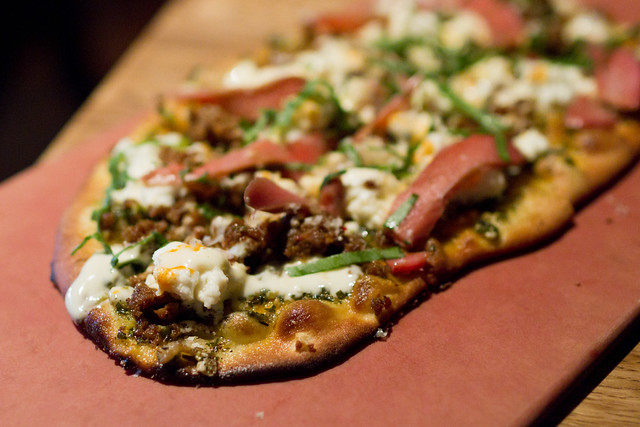
goat chorizo flatbread . ramp pesto . rhubarb . fresh ricotta

goat chorizo flatbread

More goat, but this one was from the meat column of the menu. It was a good combination for a flatbread. The goat itself wasn't too different from lamb or even beef, although a side by side comparison would probably show otherwise. Either way, it was good. The rhubarb on top was a nice touch too; we wondered if it was pickled, because it was somewhat acidic. The tragic part in all of this was that we couldn't finish it and still have room for dessert. We took the rest back to the hotel with us, but with no fridge in our room, we had to throw it away the next day. At least the kitchen got the message that we liked it.

But dessert was indeed necessary, especially with an option like this:

rhubarb n' lemon . shortcake . buttermilk panna cotta . lemon gelato . salted graham cracker

rhubarb n' lemon

What's not to like about layers of dessert in a Mason jar? Nothing, that's what. I guess it was a little hard to get all the way down to the bottom... But each new layer was a fun surprise in flavor or texture. There was the buttermilk panna cotta on top, the salty graham cracker crumbs, the cold lemon gelato, some spongy shortcake, and tart rhubarb compote, if I remember correctly. I may not have been able to eat all of the flatbread, but I finished this (with a little help from Steve).


Of the meals we had in Chicago, Girl & the Goat was one of my very favorites. It's just the sort of restaurant that Steve and I really like—small plates to share—and every dish was interesting (in a good way). I especially liked the unexpected use of fruit with the bread and the halibut. I don't know if that's a new trend, a Chicago thing or a Stephanie Izard thing, but I approve. Now, if we can just get back to Chicago some day to eat there again...
  

Saturday, March 12, 2011

end of 52 weeks

Finally, a post to wrap up the 52 Weeks of Food project. Only two weeks to cover, but Valentine's Day was a big one.

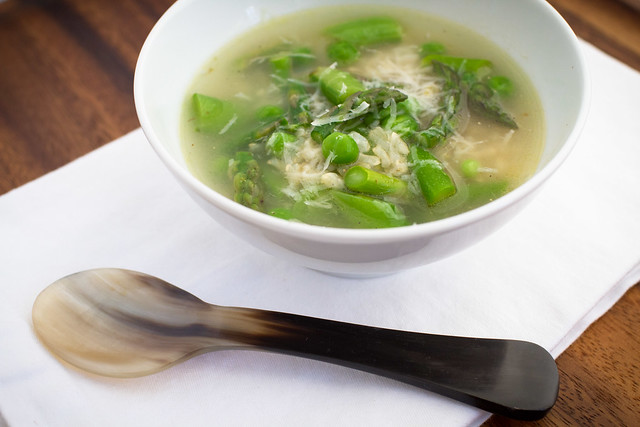
The next to last week was Superbowl Sunday. Steve and I were going to do something with crab, but we made a last minute decision to do something that didn't involve an extra trip to the fish monger on Saturday afternoon. Instead, I pulled out Heidi Swanson's Super Natural Cooking and quickly found this recipe for Spring Minestrone with Brown Rice.

soupand bowl sunday

This soup was a nice mix of green vegetables (peas, snap peas, asparagus), broth, and brown rice. We had it again later that week, adding some mushrooms, and then I ate the leftovers without the broth. A little robiola cheese on top, leftover from a different meal, made a nice variation.


Then it was Valentine's Day again. This whole project really started with Valentine's Day last year, although I didn't count it as week 1. I was inspired by how much fun I had taking pictures of the fancy food that Steve made, and I was impressed that I could manage halfway decent shots at night with a white napkin, a tripod, and regular lights in my living room. I moved away from using that set-up around week 6, as I started to favor natural daylight and got lazy about setting up the tripod, but I had little choice when Valentine's Day came around again. Steve finished cooking after dark, so I got out the old white napkin and tripod combo.

Our first course of the evening was the Lobster Cappuccino from Eric Ripert's On the Line. This was a recipe that we had bookmarked in our mad search for truffle recipes around New Year's. Because Steve was able to preserve and freeze what was left of our truffles after the truffle risotto on January 2, we had some to grate on top of this dish on Valentine's Day. The rest of the "cappuccino" was made from a pretty simple celeriac (celery root) soup, with lobster in the bottom and lobster foam on top. We ended up a little short on the foam, so rather than a solid layer across the top like a proper cappuccino, we had to settle for a dollop in the middle. The foam on the serving that I used for the picture settled a little oddly, but I decided later that it looked like an upside-down heart.

lobster cappuccino

I'm not sure what I was expecting with this recipe, but I think the lobster cappuccino exceeded both of our expectations. It was just really good. There was something about the combination of the celeriac and the lobster that just worked. It was a surprisingly good substitute for our usual first course of French Laundry "Oysters & Pearls," despite its lack of caviar and oysters.

Next came more lobster. I've grown to love lobster, and I definitely wanted some for Valentine's Day. I didn't really think about the lobster in the bottom of the cappuccino, so I requested something lobster-y for our main course as well. We seem to have made all of the lobster recipes from The French Laundry Cookbook, so I thought it was time to revisit the Lobster "Mac & Cheese."

lobster mac n' cheese

Steve made this back in 2007, but I wasn't the biggest fan back then. It was a little on the soupy side, and I don't think I appreciated the lobster enough yet. This time, the orzo mac & cheese turned out better, and I liked the whole thing more. I still prefer the leeky-beet lobster and the figgy-foie lobster, but I was glad that we gave this recipe another try. The only problem with it was that we were starting to get lobstered out by the end. Surprising, but true. Between the lobster cappuccino and this, there was a lot of rich and creamy going on in the meal.

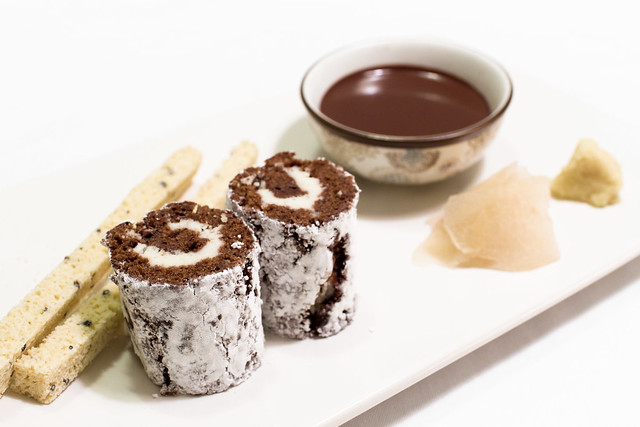
For our dessert, Steve made the Tiramisushi from Elizabeth Falkner's Demolition Desserts. This was actually one of the runner-up choices for our Valentine's Day dessert in 2008—the first year Steve cooked for us at home. It's a chocolate cake roll with mascarpone-marsala filling, served with mocha rum dipping sauce, biscotti chopsticks, shaved bosc pear for the "ginger," and freshly grated ginger for the "wasabi."

tiramisushi

It was even better than I anticipated. I actually had some of the ginger "wasabi" too. I never touch real wasabi on sushi plates, but a tiny bit of the fresh ginger gave the rolls a nice kick every so often and went well with the chocolate. The biscotti chopsticks and the pear also provided some variety, as well as more options of things to dip in the mocha rum sauce. With all those components, it felt suitably fancy for Valentine's Day.

And with that, 52 Weeks of Food was over. I went the Tiramisushi picture as the last official shot, since it seemed fitting to finish with dessert.


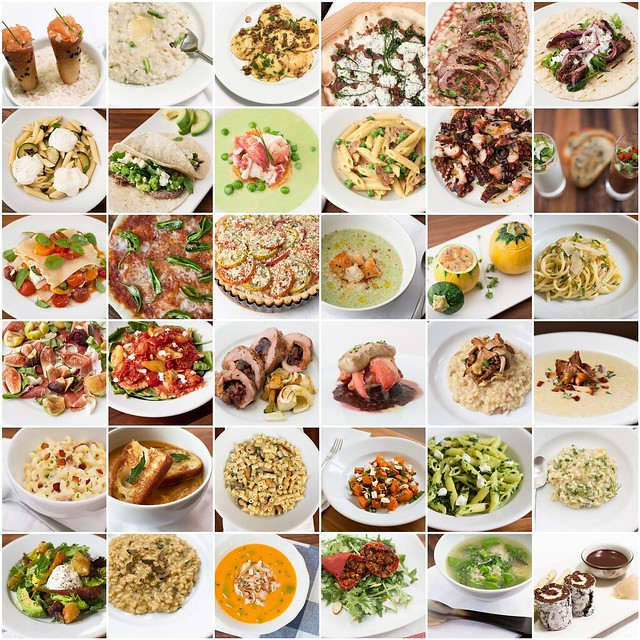
Here are some of the highlights of the project.


I'm really glad we did this. Steve didn't do so well with the blogging aspect himself, but he definitely held up his end of the deal with the cooking. We tried a lot of new recipes from our cookbook collection, and we checked off several of the recipes that we had bookmarked online. There were lots of risottos and pastas, but also several soups, salads, pizzas, and some other memorable things. Perhaps most importantly, we found some winners to add to our regular rotation. There are about 16 dishes out of the project that we've done again since.

Asparagus risotto is always good when it's in season and when we can get to a cheese store to pick up some robiola. That, along with its inspiration at Beretta, got me to like asparagus, after many years of refusing to eat it. Likewise, I started to enjoy peas after having fresh ones in the Penne alla Papalina and the Minted English Pea Soup with Lobster and Orange. When it's pea season again, I'm looking forward to more of that soup, but we'll have frozen peas in Penne alla Papalina in the meantime.

We've also had the Lamb Kofta Kebabs, nicknamed "Lambie-kins," a few times since May.  And when zucchini comes back, I'll happily eat some more of the Pennette with Summer Squash & Ricotta.

In the summer, we ate the aptly named Summertime Lasagna several times, and I adopted the Summertime Linguini as a go-to lunch to make for myself—when there weren't leftovers to eat, of course. Then came my fig phase. First, we had them in a salad with prosciutto, a few weeks later was the Fig-Stuffed Pork Loin, and finally there was the Figgy-Foie Lobster—my favorite of all.

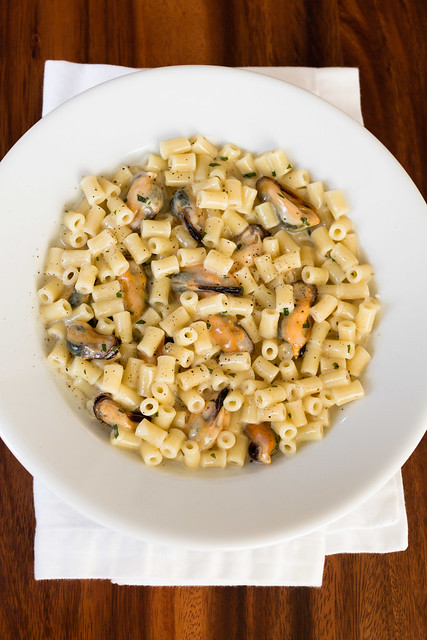
Fall brought several dishes with mushrooms, which I finally knew were not an allergen for me. Then, in the pasta category, we gained the Bacon Mac & Cheese and the Ditaloni with Mussels and White Wine, both of which we've had for dinner in the past week.

The winter's biggest discoveries had to do with carrots, of all things. After making Jamie Oliver's Roast Carrot & Avocado Salad, we decided to make the same carrots as part of a roast vegetable mix for Christmas dinner. And after the holidays, we had the Carrot Soup with Dungeness Crab. While it wasn't quite perfect, a few tweaks made it nearly so when Steve made it again.


Overall, I think my food photos have improved over the last year too. There's only a handful that I feel like I really nailed, but I'm happy with the set as a whole. I'm starting to branch out a little now with composition and props, so we'll see how it goes this year. Steve and I plan to keep making and photographing new things each week, although we won't be as strict about it. Desserts and breakfasts will count, and we'll most likely miss a few weeks when we go to Chicago (in May) and Europe (in the fall). Meanwhile, it's helping me fill up some of the days for my Project 365.
Saturday, February 5, 2011

more food... quelle surprise

And now for a roundup of the last full month of food for the 52 Weeks of Food project. Only two weeks to go and we'll be done.

On the second day of the new year, Steve made some black truffle risotto. I had bought him two little Perigord black truffles from Bi-Rite and put them in his Christmas stocking, so we were racing against the clock by New Years, trying to make sure we used them before they got too old. We went through the cookbook collection and decided to do the truffle risotto from Avec Eric, and preserve what was left of the truffles using Thomas Keller's method from The French Laundry Cookbook. We still haven't used the preserved truffle, but it's safe in the freezer. It might get used for a Valentine's Day dish.

But back to the truffle risotto...

truffle risotto

We were going to have it for lunch that day, but the whole process of making mushroom stock took longer than Steve expected. We ended up having really mediocre burritos from El Farolito around 1pm—our usual places were closed—and then we ate the risotto around 4pm, when it was finally ready. On the plus side, there was still some light for the pictures. Unfortunately, we weren't exactly hungry for it at that time. I had at least gone easy on the burrito, so I was able to eat more of the risotto than Steve.

It really had nice flavor, although it was pretty intensely earthy. The thyme was also a good addition, since the recipe didn't have any herbs.


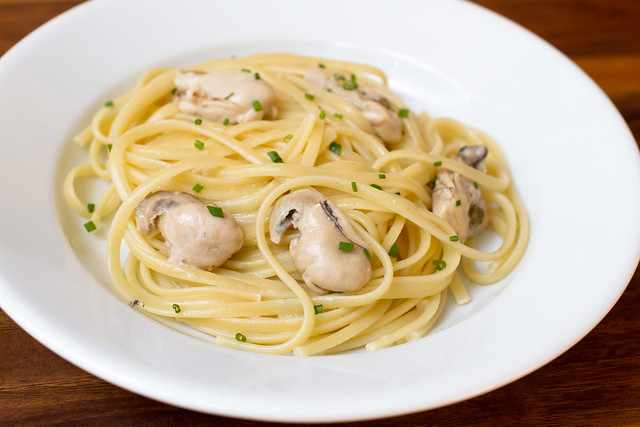
By the second week of 2011, we had come to the conclusion that Sunday lunches were good times to do our weekly dishes. That way, there was ample light, and I didn't have to worry about taking other pictures for the 365 project on my main work day. Putting the new Ethan Stowell book to use, Steve made Tagliarini with Totten Virginica Oysters, Prosecco, Chives, and Cream.

oyster pasta

The ingredients all sounded fabulous to me, although we made a few adjustments. First, I made Steve use dried linguine instead of making his own fresh tagliarini. I really didn't want him to be freaking out about pasta that wasn't behaving if I was on a schedule to get the picture taken and food eaten before I had to leave for work. Second, we used Marin Miagi oysters instead of Totten Virginica, since they were available and cheaper than our favorite Kumamotos.

The overall result wasn't as good as I hoped, however. The oysters poached in prosecco weren't my favorite, too much of the sauce for the pasta seemed to have been left at the bottom of the pan, and it needed more acidity that the prosecco apparently didn't provide. My theory is that this would be great with the right oysters, the right prosecco, etc. Anyway, none of that stopped me from eating the leftovers of the pasta the next day.


The following week, we finally did something with local dungeness crab. Steve had been talking about it for quite a while, so I had gone in search of recipes that were specific to dungeness crab. The top contender for me was Carrot Soup with Dungeness Crab from Sunset, a California lifestyle magazine/website that's been around for ages.

carrot soup with dungeness crab

Steve has an old recipe from Williams Sonoma for carrot-ginger soup with orange, so he decided to make that instead of the one from the Sunset recipe. To top the soup, he did the crab (finished in butter), some fried shallots, chives, and a quick infused chive olive oil. Once I had plated my serving, I realized that it was way too busy, rather than simple and clean like I wanted. The soup itself ended up being overly orangey as well, so Steve made some changes when he made it again last week.

This time, he used the same base for the soup (carrots, leeks, potatoes), but he used a little meyer lemon instead of the orange. (The Sunset recipe used regular lemon.) He also didn't bother with the butter on the crab; it didn't need it, and the color was prettier without it. Instead, I suggested he toss it with some of the meyer lemon juice and chives, like the Sunset recipe directed. And for toppings, we just used a few more chives and a drizzle of plain olive oil. It was simpler and tasted better. I'll have to take a new picture of it sometime, since I foresee us making it again.


Then there was the week of caramelized things from Avec Eric. I picked a couple recipes after looking at the index of the book online. The first was the Caramelized Onion and Gruyere Tart. I've been craving this sort of thing for quite a while, just waiting for the right recipe.

puff tart

It turns out, this is not quite that recipe. It didn't help that this was Steve's first time working with puff pastry. He didn't roll the dough out thin enough, so it puffed way more than it should have. There was also a bit too much oil in the tart as a whole and not enough flavor. I think it needed more cheese and more salt. It was worth a try, but the puff pastry thing would probably make a better appetizer than lunch. It looks like the search for the perfect caramelized onion tart-type thing will continue.

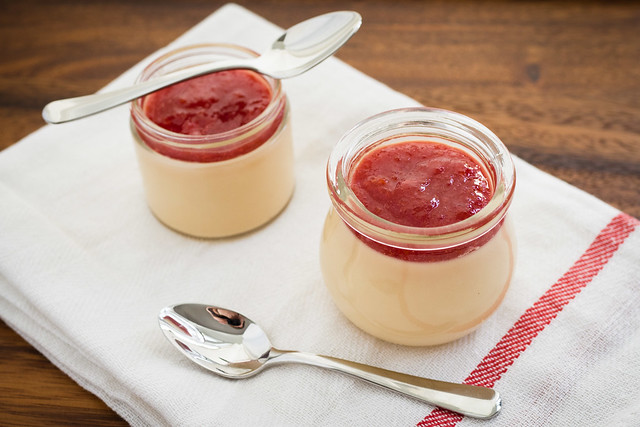
Part two of caramelized day was Caramelized White Chocolate Panna Cotta with Blood Orange Marmalade.

white chocolate panna cotta

It was another semi-failure. The white chocolate panna cotta was heavy/rich (too much gelatin?) and grainy from the chocolate. The blood orange marmalade was also pretty thick, but it had too much bitter flavor from the orange rinds and not enough bright orange flavor. I ate both of the little pots of it from the picture as leftovers, but that small size was definitely enough. The main thing I noticed was that each component really needed the other for balance. It was just too bad that the panna cotta and marmalade weren't better by themselves.


We chose another two recipes for last Sunday's lunch. This time, both recipes were for stuffed piquillo peppers. The first was one we saw Anne Burrell make on Secrets of a Restaurant Chef.

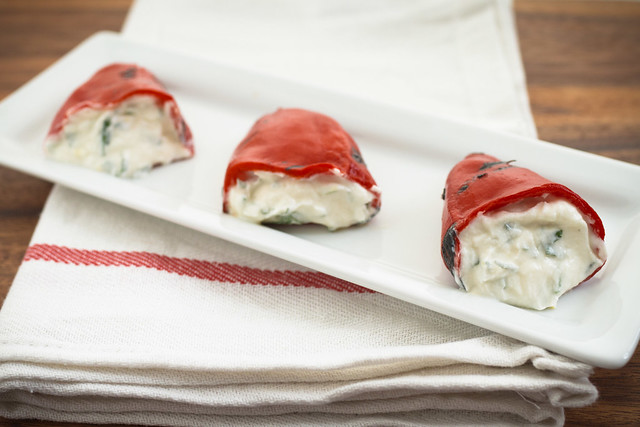
stuffed gnome hats

These were stuffed with a mixture of chorizo, manchego, and breadcrumbs and served on with a baby arugula salad with scallions and almonds.

When I was looking for that recipe, I saw another that also looked good: Stuffed Piquillo Peppers with Goat Cheese on the Martha Stewart website.

gnome hats 2.0

The Martha Stewart ones were served cold, whereas the Anne Burrell peppers were baked in the oven and served warm. We were glad we did both; they went well together on the salad. The only thing we would change is the amount of lemon in the goat cheese stuffing. I like lemon, but this was too much even for me. Between that and a little too much vinegar in the dressing for the salad, there was just too much acid. That should be easily fixed, so we might do these two recipes together again sometime.
 

Saturday, January 22, 2011

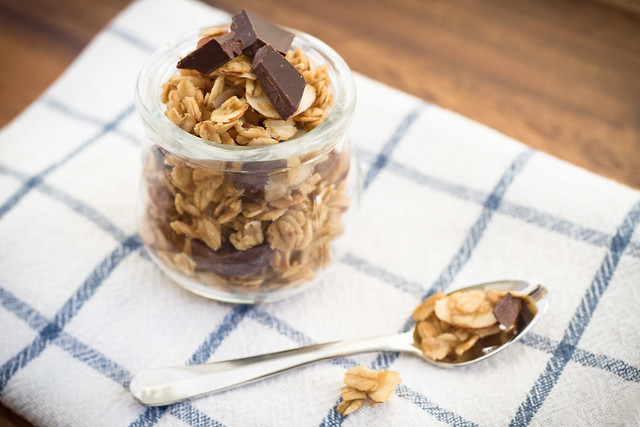
chocolate granola

For someone whose blog posts deal with food more than pretty much any other topic, it's perhaps a little surprising that I've never shared a recipe directly in this space. That, my friends, is about to change—at least for this edition.

I have a set of recipes written on old school lined paper in purple Pilot pen. I copied them down almost ten years ago, around the time that I spent the summer living with my sister Bethany in Princeton. By far, the most weathered of those pages is the one that has the recipes for granola, Ghirardelli oatmeal chocolate chip cookies, and banana bread. While I've made the cookies several times, the granola was the most immediately useful during my college years.

My sophomore year, right after that summer, I started making granola in the tiny kitchen that was in the basement of my dorm. The beauty of the recipe was that it was so easy and required few tools. All I needed was a large bowl, a sheet pan, a large spoon, and some measuring cups. In terms of ingredients, I could get away with using just four: oats, wheat germ, honey, and vegetable oil. (It came out a lot like those Nature Valley Oats 'n Honey granola bars.) From there I could get creative with dried cranberries or dried apples and cinnamon. I'd sit on the little couch in my room and eat it by the handful out of a Ziploc bag while I studied.

Since college, I haven't made granola at all. I've been wooed by fancier goods like cupcakes, cookies, muffins, and breads—all those things I couldn't make easily in a tiny, borrowed kitchen. I had all but forgotten about that granola until I saw the chocolate granola recipe on La Tartine Gourmand last week.

I decided to make some the next day, but I wasn't sure whether to use Béa's recipe or my old one with chocolate added. Hers has rice puffs, millet puffs, pumpkin seeds, and almonds, among other things. I liked the idea of adding almonds, since they were optional in my recipe—I know I'm not allergic to them now—but I didn't particularly want to invest in packages of the other stuff. There's also a stovetop step to combine the wet ingredients, which is a more involved process than mine.

In the end, I took a chance and combined the two recipes, keeping most of the amounts the same. Both of them claim to make about 4 1/2 cups of granola, and it's not exactly rocket science. From Béa's recipe, I used the salt, vanilla, brown sugar, and dark chocolate. Otherwise, it's my recipe plus a little more than the 1/3 cup of optional sliced almonds and minus the 1/4 cup of wheat germ. I didn't miss it, and it's easier to eat this way.

Without (much) further ado, here is the recipe. I'm thinking about trying it with "crunch-dried" apples, peaches, and apricots next time, in place of the dark chocolate. Or I might make half each way, since I divide the granola into two containers for storage.


chocolate granola

Chocolate Granola
makes 4 1/2 cups

4 cups old-fashioned rolled oats
1/2 cup sliced almonds
1/4 teaspoon fine grain sea salt
1/3 cup vegetable oil
1/3 cup honey
1 teaspoon vanilla
2 tablespoons light brown sugar
3 ounces chopped dark chocolate (70%)


Preheat oven to 300 F and line a large sheet pan with parchment paper (or foil).

Combine the oats, almonds, and salt in a large bowl. Set aside.

In a smaller bowl, whisk together the oil and honey. Add the vanilla and brown sugar, and whisk until well incorporated. Add the wet ingredients to the dry, and stir to coat.*

Transfer the mixture to the baking sheet, spread evenly, and bake for about 25 minutes until golden brown, stirring and redistributing occasionally.

Cool completely before adding the chocolate. Store in an airtight container at room temperature for up to 2 weeks.
(If it lasts that long.)


*If the granola seems too dry, you can put a little more oil in the bottom of the 1/3 cup measure, add a little honey, mix it up, and pour it on. Then finish stirring, of course.
 

Friday, December 31, 2010

december dish roundup

It looks like this weekend's recipe for the food project will be executed in the new year, so the recapping of December's food can now commence. 

The first dish of the month was one that I had bookmarked on 101 Cookbooks in November and was saving for our usual Christmas trip to MI.  I figured it would be relatively easy to find the necessary ingredients for it at Horrocks or even Meijer.  But since we ended up deciding to stay in San Francisco for the holidays this year, that meant that we had no more reason to wait.

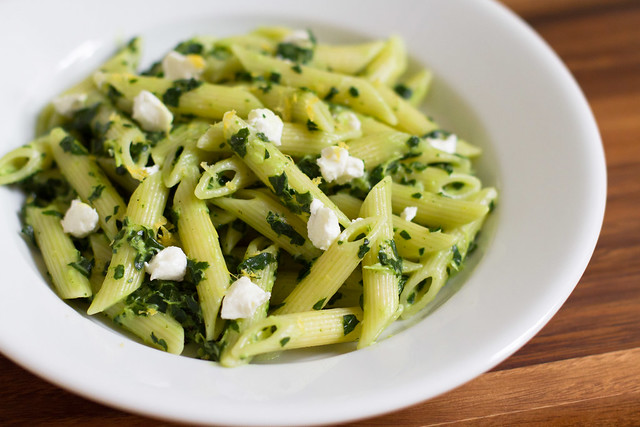
winter pasta

This winter pasta recipe uses kale rather than the more predictable spinach in an almost pesto-like sauce.  The combination of garlic, shallots, goat cheese, and lemon with pasta was one that I knew I'd like.  And because of the dark green kale, it felt like it was relatively healthy.  The one thing that Steve forgot to get at the store was some thyme to go on top.  The exclusion certainly didn't make our lunch inedible, but I was a little disappointed that we had to leave it out.  I'm eager to try it again as it was meant to be, since I really like thyme.

   
Next, a fennel, leek and arugula risotto from the blog Cannelle et Vanille.
 
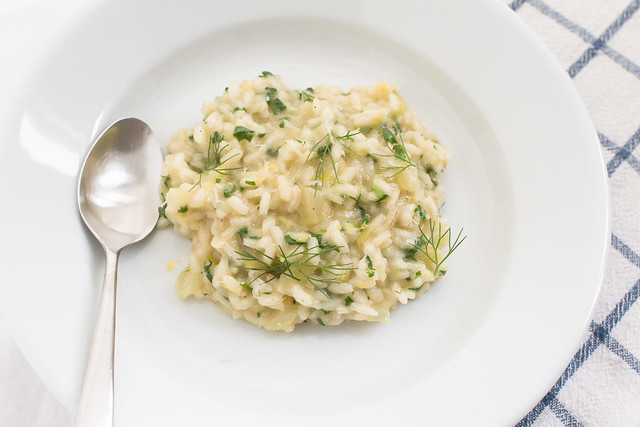
fennel, leek and arugula risotto

Steve had sent me this particular link—he got to it first in his feed reader—earlier that week, and it looked good to me.  I wouldn't expect fennel, leeks, and arugula to go in a risotto together, but it worked quite nicely with the help of parmesan cheese and some lemon to tie it together.  The recipe didn't include lemon juice—just zest—but the juice we added gave it a nice zing.
 
 
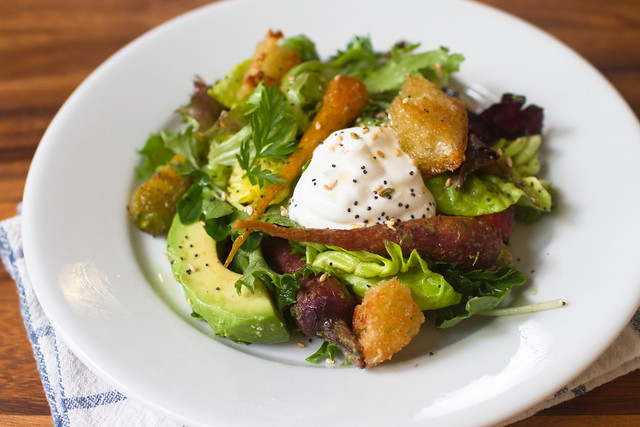
On December 18, Steve and I finally got around to tracking down some colored carrots for the winter Roast Carrot & Avocado Salad with Orange and Lemon Dressing that we had been wanting to try from Jamie at Home.  That involved a trip to the Ferry Building farmers market on a drizzly Saturday morning, but we found our pretty carrots.
 
roast carrot & avocado salad

They were the obvious star of this dish, too.  Besides being multicolored and pretty, those carrots were delicious, coated with a mixture of cumin seeds, chilies, garlic, thyme, oil, and vinegar while they roasted.  To round out the salad, there were pieces of avocado, some croutons, various greens including some little gem lettuce and carrot tops, a dollop of sour cream, and toasted seeds.  I didn't really find the avocado to be a vital part of the salad, but it didn't detract from the whole either.

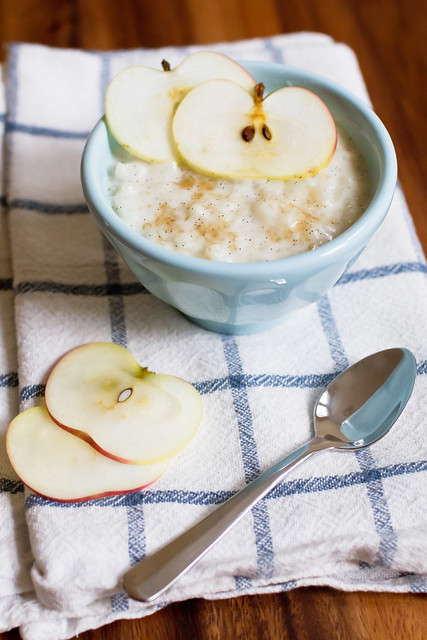
While we were at the farmers market, Steve and I also noticed some small Lady Apples, which had been featured in a coconut rice pudding recipe on Cannelle et Vanille in November.  We got some, on a whim, and Steve made the rice pudding as a dessert/snack on Sunday.
 
coconut rice pudding

The rice pudding itself was rather rich and not as subtle as the Indian version with cardamom that Steve makes occasionally.  This one really needed the apples to provide a little acid for contrast to the pudding.  Good thing they were so cute.

You might notice that I used the same dish towel as a prop in the last three photos...  I was getting tired of using only our white napkins and found the dish towel in our cupboard—one of the few that's not stained beyond belief.  I have since claimed it for my own use, but clearly, I need to branch out to others soon.  A trip to IKEA for cheap dish towels may be in our future.

 
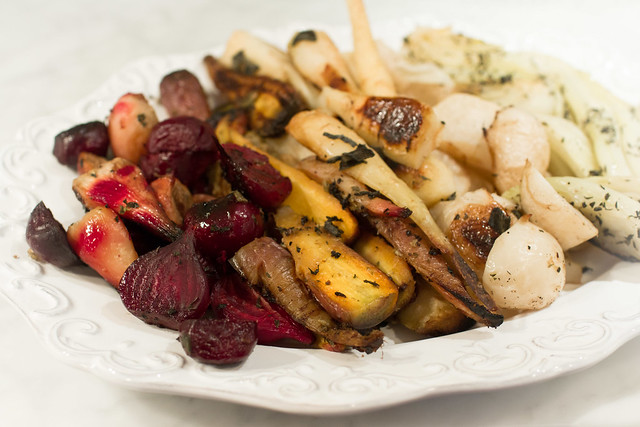
The last official dish of the calendar year was a side dish from our Christmas feast: Roast Vegetable Mega Mix from a Jamie Oliver Christmas series that we caught on the Cooking Channel.
  
roast veg mega mix

The centerpiece of our Christmas dinner was a roast of prime rib, since it's become traditional for us to have "roast beast" for Christmas.  However, that meant it was not new and therefore did not qualify for inclusion in the 52 Weeks of Food project.  Luckily, I was pretty excited about the roast veg recipe, so it was a good candidate for the weekend's new dish.  We had just had the roast carrot salad the week before, and this promised to be good (and pretty) as well.

Our sheet pan was loaded with rows of colorful beets, carrots, parsnips, turnips, and fennel, each with their own herbs and dressings.  Although the carrots with rosemary and clementine juice sounded good, Steve and I decided that he would make the carrots from the salad instead, with cumin and thyme instead of rosemary.  It was a good move; they still rocked.  My other favorites were the fennel and the parsnips, but the beets were tasty too.  I'd leave out the turnips next time, though.  We concluded that maybe we just don't like turnips all that much.

In addition to the prime rib and roast veg, Steve made roast potatoes (with olive oil and rosemary), garlic butter roasted mushrooms (with thyme instead of parsley), the macaroni gratin (fancy mac & cheese) from the Bouchon Cookbook, and chicken & pork roulade for Rob and Traci, since they don't eat red meat.  I ended up with a little bit of everything and a nice full plate.  For dessert, we had Indian rice pudding and lots of the cookies that I had made in the week leading up to the big event.
  

Monday, December 20, 2010

november eats

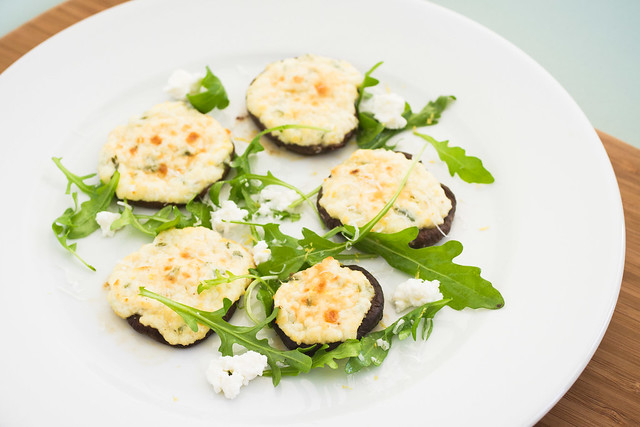
More food from this fall...  First up for the somewhat eclectic month of November: Baked Mushrooms Stuffed with Ricotta from Jamie's Italy.
 
baked stuffed mushrooms

That's right, it's yet another Jamie Oliver recipe.  We've done several during this project, and it probably has something to do with the fact that so many of his recipes are on his website.  Sure, we have several of his books, and Jamie at Home is really pretty, but the website wins for convenience.  It really helps to be able to search, bookmark things that look good, and then just go through my Firefox bookmarks when we need to decide on a new dish for the week.

Anyway, I was still in mushroom mode during the first weekend of November, so we selected this for lunch that Saturday.  The results were a'ight, but they weren't quite as pretty as the picture on Jamie's website.  The cheese spread out quite a bit.  As for flavor, I wasn't wild about the oregano in this context.  If we were to make these again, I would probably use thyme instead.  The filling also needed a little lemon juice or something to brighten it up.  The zest alone wasn't doing it.


The next week, Steve and I went back to the ever expanding cookbook shelf and pulled out the London River Cafe cookbooks, Italian Easy and Italian Two Easy.  Steve has had these for years, and our go-to carbonara recipe originally came from one of them, although it has evolved quite a bit since.  Another look was definitely overdue, so we went through and put colored tabs on the pages of anything that caught our eye.  That Saturday, we decided on Ditaloni, Mussels, White Wine from Italian Two Easy.
 
ditaloni, mussels, white wine
 
It was pretty similar to the classic moules mariniere—mussels in white wine with a little cream—that Steve often made about 3-4 years ago, so we decided to use riesling and basil here too.  The recipe didn't specify what kind of white wine to use, but it did call for parsley.  (meh.)  Our version was better, I'm sure.  It was also even better than moules mariniere, since it had pasta to pick up the sauce.  Steve made it again for dinner last Monday, and I quite enjoyed it.

 
The lunchtime light was working well for me by then, so we tried our next new dish as a Saturday lunch as well.  The plan was to make Gnudi Spinaci from Italian Easy, but I wasn't really enthused with the results.  Gnudi are supposed to be a little like gnocchi, except that they're made from ricotta cheese instead of potato.  Steve and I didn't really know what we were doing, however; so there was some guesswork involved in deciding how much semolina should coat the cheese mixture, how big they should be, etc.  They turned out okay, but they were nothing special.  I was also being picky about the picture of them, so I switched it out of the food project when another option came along at dinner that night.

Steve had bought some sunchokes (also called Jerusalem artichokes) kind of randomly, as he is wont to do.  That prompted our Saturday dinner.  We waffled between a Jamie Oliver sunchoke salad and Steve's idea for squab with sunchoke puree.  Sometime that afternoon, in the course of our trip to the Ferry Building for ingredients, Steve decided to make both.  The salad won the honor of dish of the week, though.

sunchoke salad
 
From the book Cook with Jamie, the Warm Salad of Crispy Smoked Bacon and Jerusalem Artichokes was curiously good.  We had only really had sunchokes once before, glazed and in a salad at the French Laundry, and I really didn't remember what they tasted like.  They're a little potato-y, but the flavor is kind of earthy and more complex.  My one addition to the salad in the future would be something fruity, like currants.

The tricky part about the meal was trying to take pictures after dark.  Steve wanted pictures of the food, so I was obliged to at least try.  I used two lamps in an effort to get as much light into one little corner of the living room as possible without shining the light directly onto the plates.  The salad shot turned out better and more colorful than the squab.  The light still wasn't quite as diffuse as I would have liked—points of glittery, bright white on the food makes it look less appetizing—but it was passable.

  
squab

The squab dish itself turned out really tasty too.  I hadn't had Steve's squab before, because he had been making it while I was away at rehearsals.  It was perfectly cooked, and way more flavorful than chicken.  (Squab is young pigeon, but don't worry: we didn't go out and shoot it ourselves or anything.)  To go with it, Steve made some sauteed mushrooms and the aforementioned sunchoke puree.  The puree was a little sweeter and perhaps creamier than potatoes, but it worked just as well.


Last, we come to the weekend following Thanksgiving.  Nothing Steve made for Thanksgiving dinner was new; he makes mashed potatoes, gravy, and butternut squash with brussels sprout leaves almost every year.  (Our sister-in-law, Carmen, makes the turkey.)  After a day or two off from serious cooking, Steve made our official dish for the week on that Sunday for lunch. 

spicy squash salad

A friend of mine had just posted the link on Facebook for Spicy Squash Salad with Lentils and Goat Cheese from Smitten Kitchen, and it reminded me that I had recently bookmarked it too.  It might have been better suited for Halloween, with the black lentils and orange butternut squash, but it tasted just as good in late November.  Steve wasn't able to find more black lentils at the stores anyway, so he ended up using green ones.  Along with the spicy butternut squash and green lentils, the salad had goat cheese for creaminess and tang, butternut squash seeds for salt and crunch, and mint for greenery and slight cooling.  It was one of those salads in which the perfect bite was just that: perfect.  (Not all bites were perfect, but it's always good to have goals.)

And that's all for November.  I'm catching up!  Since Christmas is at the end of this week, it won't be long until I'll be recapping December's dishes

Saturday, December 11, 2010

fall in the air

It's funny how fast the new seasons arrive sometimes.  Rather than a gradual slide from summer into fall, one day suddenly feels—or smells—subtly different than the ones before.  Sure, there are still holdouts, days that are trying to be summery, but there's no mistaking the fact that those days don't quite feel like actual summer (or Indian Summer, as the case is here).  Once October hit this year, it just felt like time for fall food.
 
In our case, that meant lots of new dishes with mushrooms.  We had figured out prior to one of our trips earlier in the year that I, unlike my sister Bethany, am not allergic to mushrooms.  So I had to make up for some lost time and get to know them properly.

On October 2, we began our streak of mushroom dishes with a Jamie Oliver Mushroom Risotto from Jamie at Home.

mushroom risotto

Steve got to use some of the dried porcinis that we had purchased at the Fatted Calf during our Napa trip in August, as well as some assorted fresh mushrooms from Far West Fungi in the Ferry Building.  The results were quite good, but even the little bit of parsley on top wasn't for me.  Next time, we use thyme.  (It's better for puns anyway.)

 
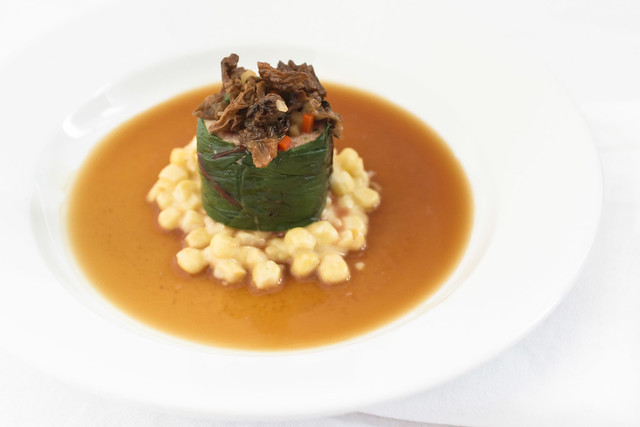
The following week, we selected a recipe from the French Laundry Cookbook: Roulade of Pekin Duck Breast with Creamed Sweet White Corn and Morel Mushroom Sauce.

duck roulade

I think Steve had a little trouble wrapping the swiss chard around the duck breast without it falling apart, but it came out well enough that I was able to find an angle that worked for the picture.  I liked the duck/corn/mushroom combination a lot, although I preferred the lobster/foie/fig from the previous month.


Moving on to week 35, we did one more mushroom dish, this one also with corn.  It was from Michael Symon's book, Live to Cook: Sweet Corn and Wild Mushroom Soup.
 
sweet corn & mushroom soup

In this case, the herb used was thyme, so it worked just fine for me.  And since Michael Symon is all about the pork, there was some bacon on top to complement the corn and mushrooms.  Again, it was a very good dish, but I didn't go wild over it.  Maybe it was the lack of cheese...


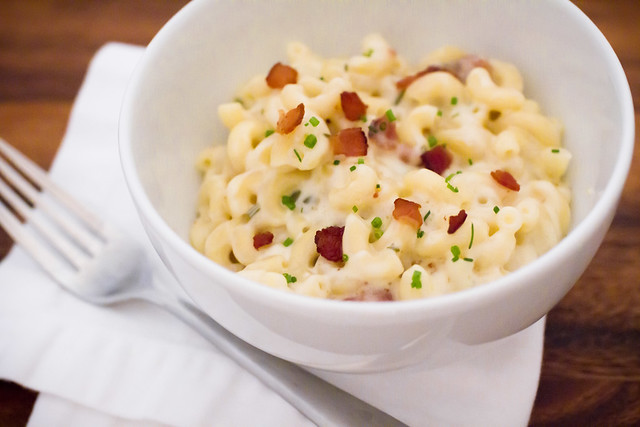
That was not a problem the next week.  We chose a Michael Symon recipe from the Wisconsin cheese website.

bacon mac

Bacon Mac & Cheese sounded like a winner, and it was.  Steve did not use Wisconsin gruyere, but it was just as good with the Swiss(?) gruyere that our neighborhood store carries.  I'm not usually one for adulterating my macaroni & cheese with anything meaty; however, the bacon, rosemary, and chives really worked for me.
  
The downside of the recipe was that the cheese sauce separated when reheated for lunch the next day.  I got stringy cheese with my macaroni and a whole lot of oil at the bottom of the bowl, most of which I poured off.  Steve, being the smart guy that he is, has fixed that problem the last couple times we've had this by making a bechamel sauce instead.  Not only does the cheese sauce stay together better in the leftovers, it's also healthier since it substitutes regular milk for some of the heavy cream.  Maybe Steve will post the revised recipe on his blog one day.  (hint hint.)


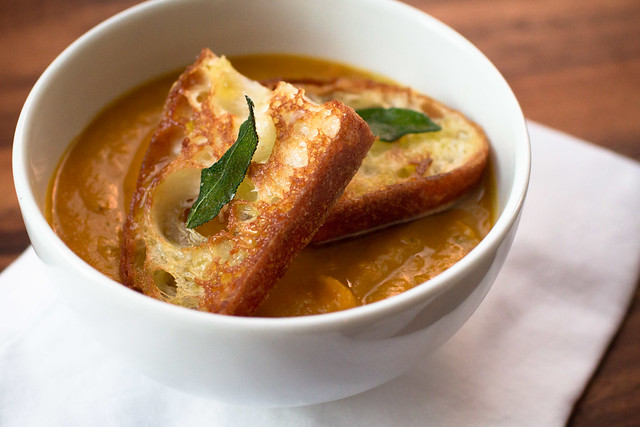
Rounding out October was Halloween.  It wasn't terribly cold, but it still seemed a good day for a dinner of soup.  Steve and I looked at our bookmarked recipes and landed on Jamie Oliver's Superb Squash Soup with the Best Parmesan Croutons.  We found it on his website, but it also happens to be from the Jamie at Home cookbook.
 
squash soup

As it turned out, I thought the butternut squash soup was indeed superb.  Steve considered putting in a splash of cream, but it didn't really need it.  I remembered the butternut squash soup we had had at DB Bistro Moderne in NY last January, and that had been almost all puree, according to our server.  This was pretty similar, and it was great with just the drizzle of olive oil we put on top.  Still, if/when we make it again, I might like to try some of the garnishes that were on the DB Bistro version: caramelized onions, pumpkin seeds, a little Italian parsley, cherries or a drizzle of balsamic vinegar.  It might not even need special croutons with a few of those garnishes to break up the sameness of the soup.  I imagine a little bread would still be good on the side, though.
 
 
Well, that takes care of another month!  It also takes care of the last vestiges of natural light in the evenings.  By the last two weeks of October, it was getting rather difficult to get pictures of dinner before the light was gone—and that was before daylight savings time ended.  Since I don't have a set-up for artificial lighting, we've now shifted to weekend lunches for most of our food project photos.

Thursday, December 9, 2010

the last of summer

It's time to work on catching up with the 52 Weeks of Food project again.  Even though the chilly, rainy weather of S.F. winter is upon us—and I'm starting to think about Christmas cookies—I'm still recapping summer food.

In San Francisco, some of the nicest days of the year usually come in September or October, once the fog is out of the way for the summer.  There are a few ridiculously hot days, but by the official beginning of fall, the hot days have the influence of a cool breeze to make them pleasant.  Sadly, although October may still feel summery once in a while, the local food is turning definitively toward fall by then.  As a result, September feels like the last gasp for summer produce.

Once the peaches and nectarines of the summer months are gone, the focus can shift to figs.  And this was the summer/fall that I fell for figs.  They seemed to be everywhere in September, but it may have just been that I was looking for them.  We did the Jamie Oliver fig salad in late August; that was a bit of an outlier, though.  The real fig obsession began around Labor Day, after our trip to the farmers market and the resulting lunch of figs, goat cheese, and other stuff.

Some of the many figs that we had purchased were used in our dinner on Labor Day with Dan, Carmen, and Steve's parents: Fig-Stuffed Roast Pork Loin from the Ad Hoc Cookbook.
 
fig-stuffed tenderloin

Through a combination of factors—no pictures of the dish on Labor Day, leftover fig jam for inside, and a general tastiness the first time—we ended up making it again a few days later and counted it as our new dish for the week after Labor Day.  This time, Steve used a pork tenderloin so that it would be enough for just the two of us, and he made some macaroni gratin (fancy mac & cheese) to accompany it.  The mac & cheese didn't make it into the final picture, but some of the fennel and preserved lemon that Steve roasted with the pork did.  Personally, I was a bigger fan of the former, but that's no surprise.

  
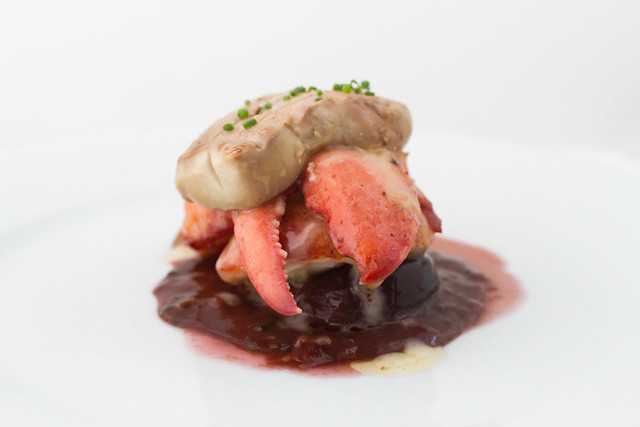
The next week, Steve put figs with something else I like: lobster.  This dish was from the French Laundry Cookbook, so it was a more involved Thomas Keller recipe than the previous week's.

figgy foie lobster

The Figgy Foie Lobster, as like to call it, was amazing.  The real name is Five-Spiced Roasted Lobster with Port-Poached Figs and Sautéed Foie Gras.  There's a sauce or two, a flattened fig, a lobster tail and claw, and a piece of foie gras on top of it all.  It's not the kind of recipe one makes every day; it's a little excessive.  But it was oh so good.  Thomas Keller knows his lobster.  All of the flavors balanced each other beautifully, and the dish didn't feel heavy, despite the foie gras on top.
  
The biggest challenge for Steve seemed to be stacking it all in such a way that it wouldn't fall and mess up the plate before I could take the picture.  The plate that made it into the photo was actually a do-over, which involved washing off the plate completely and building it again with a fresh spoonful of sauce.  Happily, it worked out that time.

  
For dessert, we had... more figs!

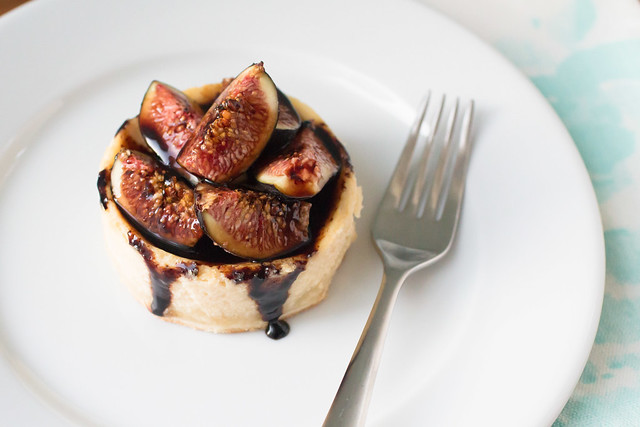
goat cheese custard with figs

The recipe was from Tartlette: a goat cheese custard, much like cheesecake, with figs and a sweet balsamic syrup on top.  Steve improvised with cooking containers on this one.  The smaller custards cooked in ring molds worked out pretty well, but the ones he did in ramekins and one that he did in a larger tart pan didn't cook quite right.  He ended up buying some small tart pans and rings after that, so we'll be ready next time.

  
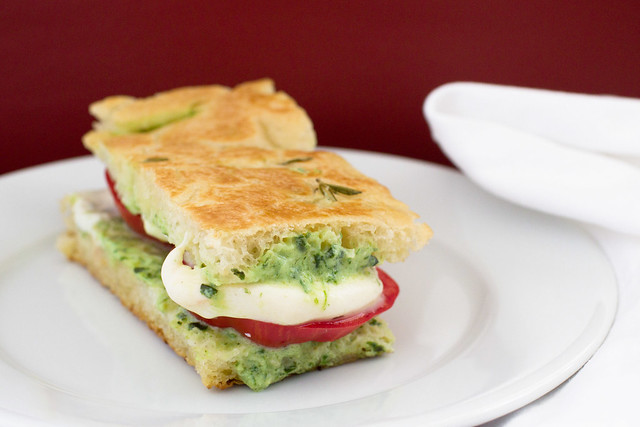
Finally, at the end of September—on Dan's birthday, actually—Steve made our last summery dish of the year: Cheesy Heirloom Panini Batons from 101 Cookbooks.

panini batons

Steve even went a step further than Heidi and made his own rosemary focaccia from the bread book that I had given him for his birthday.  The panini batons ended up being a little bigger than the suggested size, but they were a good size for our lunch.  We used some of the last heirloom tomatoes of the season, mozzarella, and the green spread from the recipe—ricotta, garlic, basil, chives, and olive oil.

 
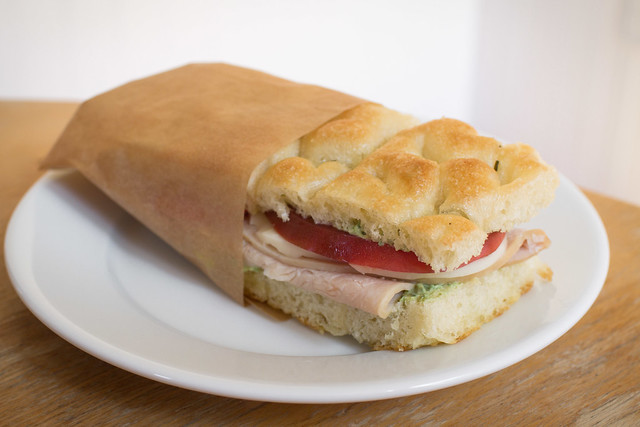
Then I got creative with the leftovers.  I was in rehearsals for my fall show at the time, so I had to eat lunches and dinners without Steve most days.  We had leftover focaccia, green spread, and mozzarella; so instead of firing up the stove for paninis, I got some sliced turkey breast and put it all on the focaccia to make a nice cold sandwich.  The downside of the focaccia was that it was pretty oily, which made it messy to hold.  A little parchment solved that problem, and kept the sandwich from falling apart too.

leftovers sandwich
 
In the next installment, we move from September into October.  In other words, from figs to mushrooms.
 

Wednesday, November 10, 2010

august cookery

Time to catch up with the old 52 Weeks of Food project.  I have 14 weeks worth of food to cover, and I don't even want to know how far behind Steve is with the blogging.  I'm mostly just glad that he's kept up with the cooking part each week.

When last I blogged about our cooking endeavors, I left off with the broccoli cheddar soup of week 24.  That was the very end of July.  August began with another recipe from another food blog: La Tartine Gourmand.

stuffed zucchini

I sent the link to Steve one day, because I thought the pictures were pretty.  It wasn't so much that I wanted him to try to make it.  Nevertheless, he came home from the farmers market not long after with a few globe zucchini—the very same kind that were used in this recipe.  So of course, we had to try it once we had them.  The squash were filled with a mixture of the zucchini innards, sweet potato, prosciutto, parmesan, celery, garlic, shallots, thyme, and marjoram.  We ate it with some plain white rice and opened a bottle of Kuleto Estate Chardonnay.  It was a good meal, and it was different from many of our usual recipes.

Right before our anniversary trip, we took care of week 25 in the form of a Saturday lunch: Summertime Tagliarini from Jamie Oliver's website.

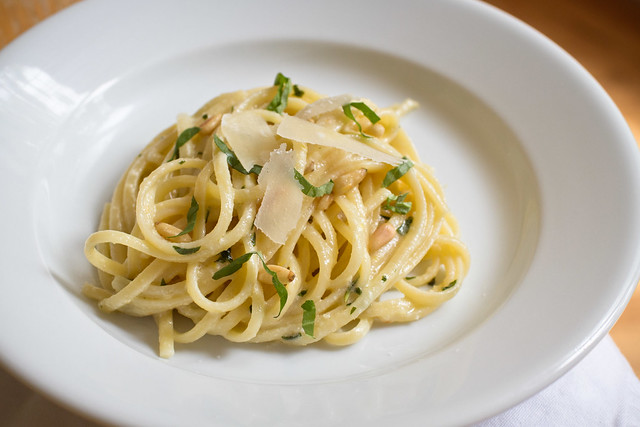
summertime linguini

We strayed slightly from the website version.  First, we used linguini, which is similar but easier to find than tagliarini.  Second, I requested a change from the parsley in the original to basil, which I much prefer.  I didn't feel too badly about that, since Jamie mentions a basil version at the River Cafe in the introduction.

The recipe for this pasta is really easy, especially if you skip the step of warming the bowl of sauce over the pasta water.  Steve determined that it wasn't necessary anyway, since the sauce heats up and melts the cheese just fine when you mix it with the cooked pasta at the end.  If you heat it too much or too fast, which you risk doing with the double boiler method, the sauce tends to seize up.  Anyway, it's so easy that I've made it a couple times for lunch recently.  (A quarter recipe gives me two servings.)  And it has so many things I like: pasta, cheese, basil, lemon, and pinenuts.  Win-win.

After all of the good eating on the Napa trip, we got back to the project with another easy Jamie Oliver recipe.  This one was the creatively titled Easiest, Sexiest Salad in the World.
 
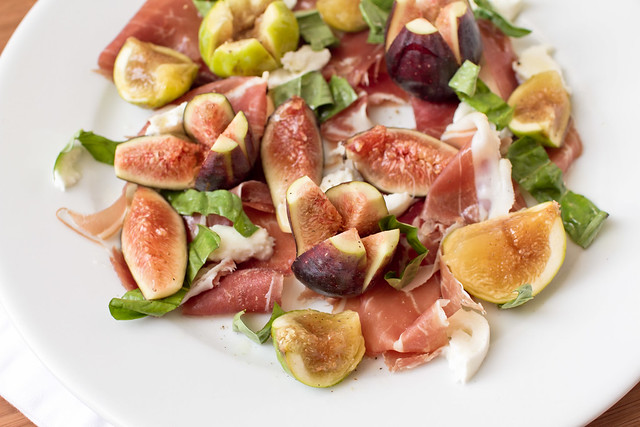
fig salad

It was the beginning of my fall fig obsession.  There were figs of two kinds—I now know that I prefer the black ones—along with prosciutto, mozzarella, basil, and a dressing of olive oil and lemon juice.  It was a little like the Grilled Peach Salad that we often eat in the summer, but I think I prefer the grilled peaches.  I suppose this is a good option for the post-peach season, however.

We stuck with the online sources for one more week after that, switching from Jamie Oliver to 101 Cookbooks.  I had gone through Heidi's archives and looked for recipes that looked good to bookmark, paying attention to the dates on her blog entries to keep the seasonality correct.  While the cherry tomatoes were still had the farmers market, Steve made the Red Pesto Ravioli.

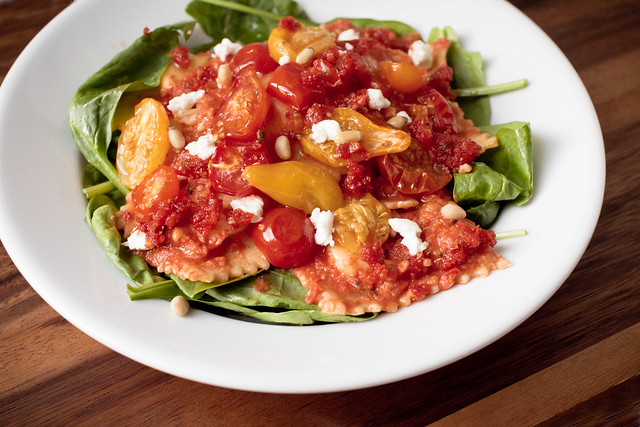
red pesto ravioli

Luckily, Heidi's recipe had pinenuts as an option, because the walnuts that she used for her pesto would not have worked out so well for me.  Our result didn't have quite the rustic look of hers, but it was more important that I live.  The "optional" oven-roasted cherry tomatoes for topping were also a very good idea.  Since Steve is Steve, he insisted on making his own ravioli, rather than buying some as the recipe suggests.  His goat cheese and ricotta ravioli turned out really well; he seems to be getting better at rolling out fresh pasta.  In the end, the only change I'd make is to use less garlic in the pesto or cook it a bit first.  It was pretty intense, and I don't like tasting garlic for several hours after dinner.  But other than that, I'm looking forward to next summer so we can have it again.
 
The next weekend, we hit the (cook)books once more, namely David Tannis' A Platter of Figs.  We had done the Shaved Summer Squash with Squash Blossoms several weeks before, but it was time to try the rest of the "Yellow Hunger" menu.  The main course of that menu was Halibut with Indian Spices, Yogurt Sauce, and Yellow Tomatoes.

yellow fish

I've found that while I love crudo fish dishes, cooked fish isn't generally my favorite.  I enjoy a nice fillet of salmon occasionally, probably because it's a good excuse to eat the cheesy polenta that Steve serves with it, but I usually don't order cooked fish in restaurants.  I'm willing to try just about anything, though.  This halibut was yellow from an Indian spice rub and served with yogurt sauce, which sounded interesting.  The yogurt had various spices in it as well, but I think I wanted something more akin to raita, with mint actually in it and not just on top.  Lemon juice might have helped too, although the sauce was already pretty thin.  Overall, I wasn't wild about it.

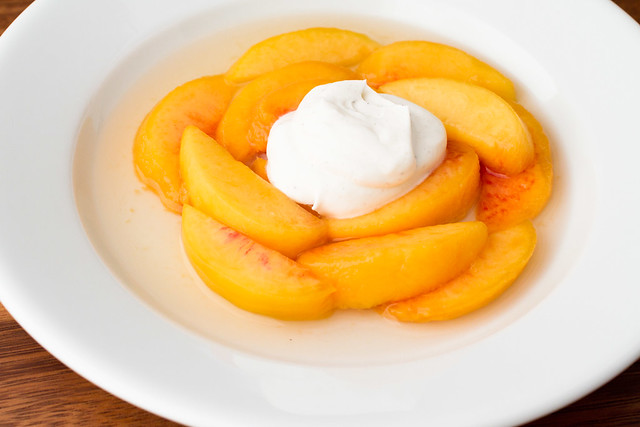
For dessert, a simple pairing of peaches—yellow, of course—soaked in white wine.

peaches in wine

Steve made some whipped cream to go with it, and I suggested adding cardamom for interest.  We had had cardamom whipped cream on a plum tart at Contigo last year, and I remembered loving it.  It was a good move.  As a dessert, it wasn't as elaborate as the sauternes cake with peaches that I was craving from our dinner at Redd, but it was delicious and summery anyway.
 
Next up: my obsession with figs gets a workout.  Plus, the end of the late San Francisco summer.